Introduction: Remembering a Forgotten Hero of India’s Freedom Struggle
Indian history is rich with towering figures whose courage reshaped the destiny of a nation. Yet, beyond the well-known leaders lies a powerful group of revolutionaries whose sacrifices were just as profound, if not more brutal. One such name is Ullaskar Dutta, a fearless revolutionary whose life story reflects extraordinary resilience, ideological commitment, and unimaginable suffering under British colonial rule.
Ullaskar Dutta’s journey—from a passionate young nationalist to a tortured political prisoner in the infamous Cellular Jail—stands as a stark reminder of the price paid for freedom. His life was not only a story of resistance but also a deeply human account of endurance, trauma, and intellectual defiance.
This article explores the life, ideology, revolutionary activities, imprisonment, writings, and legacy of Ullaskar Dutta, offering a comprehensive and historically grounded perspective on one of India’s most courageous freedom fighters.
Early Life and Influences: The Making of a Revolutionary Mind
Ullaskar Dutta was born on April 16, 1885, in the Brahmanbaria district of present-day Bangladesh, then part of undivided Bengal under British rule. From an early age, he was exposed to a political environment charged with anti-colonial sentiment. Bengal, at the turn of the twentieth century, was the epicenter of revolutionary nationalism, intellectual resistance, and mass political awakening.
A defining influence on Ullaskar’s young mind was Bipin Chandra Pal, one of the most prominent leaders of the extremist nationalist movement. Pal’s fiery speeches, uncompromising nationalism, and call for complete independence deeply inspired students across Bengal. Ullaskar was among those who absorbed these ideas with unwavering conviction.
As the Swadeshi Movement gained momentum following the partition of Bengal in 1905, Ullaskar embraced its principles wholeheartedly. He rejected foreign-made goods, adopted traditional Bengali attire, and viewed economic self-reliance as an essential weapon against imperial domination. These choices were not symbolic gestures but conscious acts of resistance that shaped his revolutionary identity.
Entry into the Underground Movement: Anushilan Samiti and Revolutionary Politics
Driven by a belief that constitutional methods were insufficient to overthrow colonial rule, Ullaskar Dutta gravitated toward the revolutionary underground. He became actively involved with Anushilan Samiti, a secret organization dedicated to armed resistance against the British Empire.
The Anushilan Samiti was not merely a militant group; it was an ideological training ground that emphasized discipline, secrecy, and total commitment to national liberation. Ullaskar quickly emerged as a technically skilled and deeply committed member, particularly involved in the manufacturing and handling of explosives.
At a time when British surveillance was intense and brutal, joining such an organization required immense courage. Ullaskar accepted this risk fully, convinced that personal sacrifice was essential for the greater cause of freedom.
The Alipore Bomb Case: Arrest, Trial, and Death Sentence
In 1908, British authorities cracked down on revolutionary activities following a series of assassination attempts and bombings aimed at colonial officials. Ullaskar Dutta was arrested in connection with the infamous Alipore Bomb Case, one of the most significant revolutionary trials in colonial India.
The British government accused Ullaskar of manufacturing bombs intended for an assassination attempt on Sir Andrew Fraser, the Lieutenant Governor of Bengal. The trial was conducted under intense political pressure, with the colonial administration eager to make an example of revolutionary activists.
In 1909, Ullaskar Dutta was sentenced to death. The verdict sent shockwaves through revolutionary circles across India. Unlike many others, Ullaskar initially refused to file an appeal, viewing execution as an honorable end rather than submission to colonial authority.
Commutation and Exile: From Death Row to Kala Pani
Despite Ullaskar’s refusal, fellow revolutionaries—most notably Barin Ghosh—along with persistent appeals from his parents, eventually persuaded him to challenge the verdict. The appeal succeeded, and his death sentence was commuted to life imprisonment.
However, mercy from the British state came with a darker fate. Ullaskar was deported to the Cellular Jail in the Andaman Islands, infamously known as Kala Pani. This prison was designed to crush political prisoners through isolation, forced labor, and psychological terror.
For many revolutionaries, Kala Pani was worse than death. For Ullaskar Dutta, it became a prolonged descent into physical and mental suffering.
Life in the Cellular Jail: Torture, Isolation, and Psychological Trauma
The conditions in the Cellular Jail were inhuman by design. Prisoners were kept in solitary confinement, denied basic human contact, and subjected to relentless physical punishment. Ullaskar endured some of the most brutal treatment inflicted by colonial authorities.
He was subjected to electric shocks, a form of torture that caused severe neurological damage. These sessions often left him unconscious for extended periods and permanently weakened his physical health. Forced labor, sleep deprivation, and continuous humiliation were routine aspects of prison life.
The prolonged torture took a devastating toll on Ullaskar’s mental well-being. He suffered from severe depression, emotional breakdowns, and suicidal thoughts. British officials, rather than acknowledging responsibility, labeled him mentally unstable—an accusation often used to discredit political prisoners.
As his condition deteriorated, the colonial administration transferred him to a mental asylum, attempting to erase his revolutionary identity by reducing him to a medical case.
Transfer to Madras and Continued Imprisonment
Following his confinement in the asylum, Ullaskar Dutta was eventually moved to Madras to serve the remainder of his life sentence. Though removed from the worst conditions of the Andaman Islands, the damage had already been done.
Years of torture left lasting scars—both physical and psychological. Yet even in this broken state, Ullaskar’s intellectual clarity and moral conviction remained intact. He continued to reflect deeply on the nature of colonial oppression, justice, and human dignity.
His survival itself became an act of resistance.
Literary Resistance: Documenting Colonial Brutality
One of Ullaskar Dutta’s most enduring contributions to Indian history lies in his written works, which provide rare, firsthand accounts of colonial prison life. He documented his experiences in two powerful Bengali books:
Dvipantarer Katha
Amar Karajiban
These works are not mere memoirs; they are historical documents that expose the systematic brutality inflicted on political prisoners by the British Empire. Ullaskar’s writing is marked by clarity, emotional depth, and moral urgency.
Through his words, he transformed personal suffering into collective memory, ensuring that the atrocities of colonial rule would not be forgotten or sanitized by official narratives.
Later Life and Death: A Quiet End to a Revolutionary Life
Ullaskar Dutta spent his later years away from the spotlight, his health permanently compromised by years of imprisonment and torture. Unlike many post-independence leaders, he did not seek political power or public recognition.
He passed away in 1965, in Kolkata, West Bengal, at the age of 80.
Though his death went largely unnoticed by the broader public, his legacy continues to resonate among historians, scholars, and those committed to understanding the deeper truths of India’s freedom struggle.
Legacy and Historical Significance
Ullaskar Dutta’s life represents the extreme sacrifices made by revolutionary freedom fighters whose stories are often overshadowed by mainstream political narratives. His courage, refusal to compromise, and willingness to endure unimaginable suffering place him among the most resolute figures of India’s independence movement.
He stands as a symbol of:
Revolutionary nationalism
Resistance against colonial oppression
The psychological cost of political imprisonment
Intellectual defiance through literature
In remembering Ullaskar Dutta, we confront the uncomfortable realities of colonial rule and honor those who paid the highest price for freedom without expecting reward or recognition.
Conclusion: Why Ullaskar Dutta Still Matters Today
In an age where freedom is often taken for granted, Ullaskar Dutta’s life forces us to reflect on its true cost. His story is not just about the past—it is a warning, a lesson, and a call to remember.
By revisiting his struggles, writings, and resilience, we preserve the moral foundation upon which modern India stands. Ullaskar Dutta may not be a household name, but his legacy is etched into the very idea of resistance, courage, and human dignity.
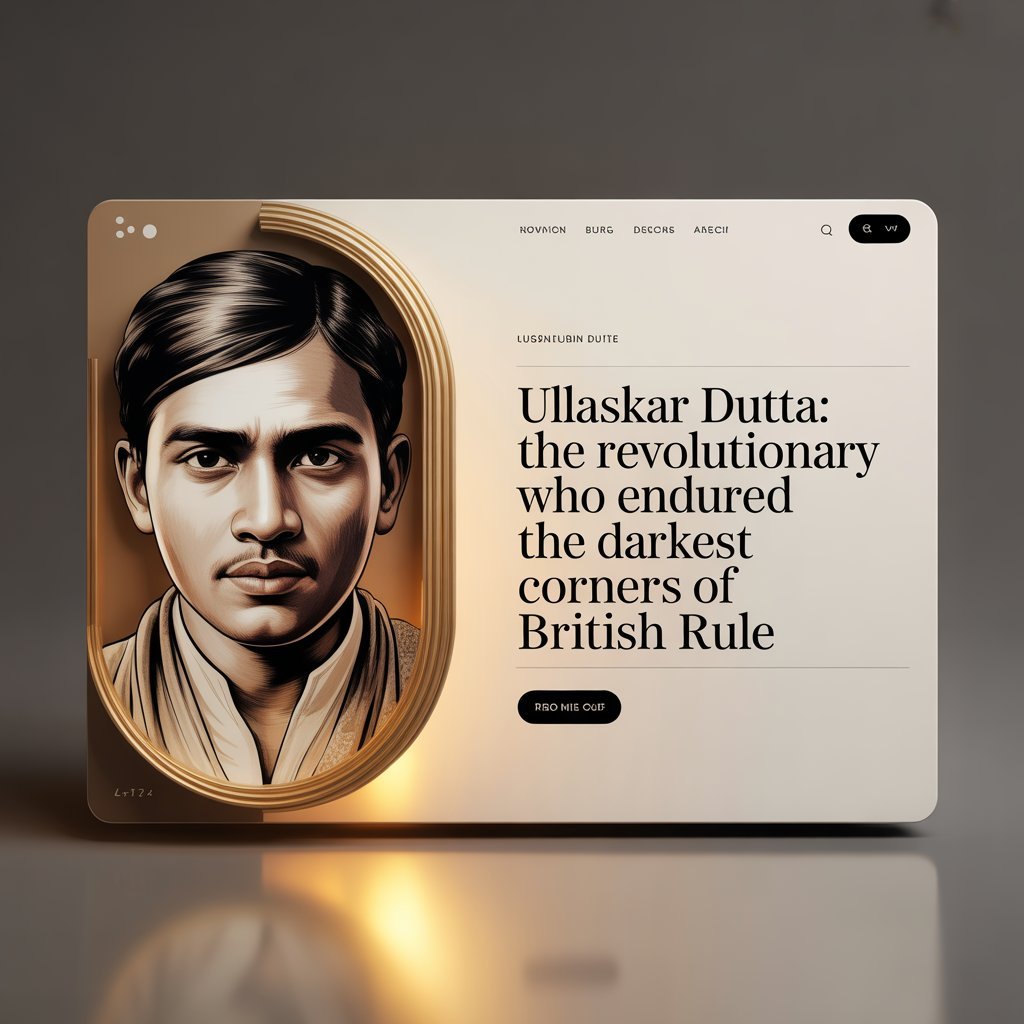
Ullaskar Dutta: The Revolutionary Who Endured the Darkest Corners of British Rule
-
- February 1, 2026
- 0 Comments

Best Job Consultancy in Silchar for Private Jobs, Freshers & Placement Services in silchar
finding the right career opportunity requires more than sending resumes randomly. Job seekers ...

Silchar Job Consulting | Pvt Jobs Apply — Your Gateway to Secure Private Employment Opportunities
In today’s intensely competitive employment landscape, securing a stable, well-paying private job requires ...

Looking for a Job? 5 Critical Things You Must Know Before Any Job Interview
Expert Career Guidance by Silchar Job Consulting — #1 North East Recruitment & ...